Museum Musing

Welcome to the musings of a museum fanatic exploring Chicago's museums!

  • The last day! Time really flew by here in the Windy City. I knew it would go fast but it really does feel like I just got here.

    Donya, a tour guide and former resident of public housing, took us on a phenomenal tour of the brand new National Museum of Public housing. It was so new it still smelled like paint and construction. The tour took you back in time to three different family’s apartments. The recreated spaces in the last original building of its kind really felt as though you were stepping into some one’s home who had just left. We were encouraged to look through their things and make ourselves comfortable on the furniture. It was a very unique space. In a museum world of “don’t touch this” and “don’t sit there” it was so nice to be encourage to explore. One of the highlights was the immersive video that was projected on to an entire wall of one of the retooled apartments. The video discussed the history of redlining in urban spaces and was a wonder to watch.
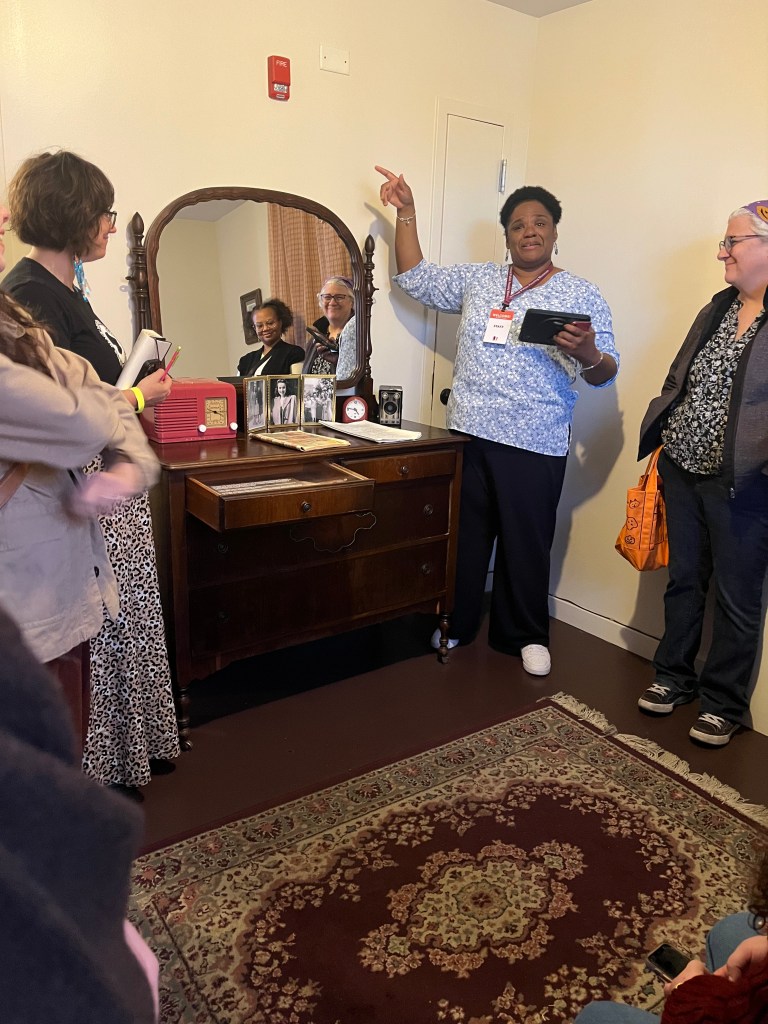
    Donya showing us around one of the rooms at the National Museum of Public Housing.

    So far, the National Museum of Public Housing had some of the best uses of technology we’ve seen. It was integrated well into the experience and Donya seamlessly moved us through out the space, including splitting us into two groups for the final apartment where we heard stories from a family who had lived and lost in Chicago public housing over shiny new headsets. The connection to the real families who lived in public housing really stood out as truly special. These were real stories of real people and we were surrounded by their real things, even though it was a curated space. It reminded me of my work in living history. Considering the people of the past, no matter how distant, to be another kind of family just like Donya did is something I really want to take with me into my work.
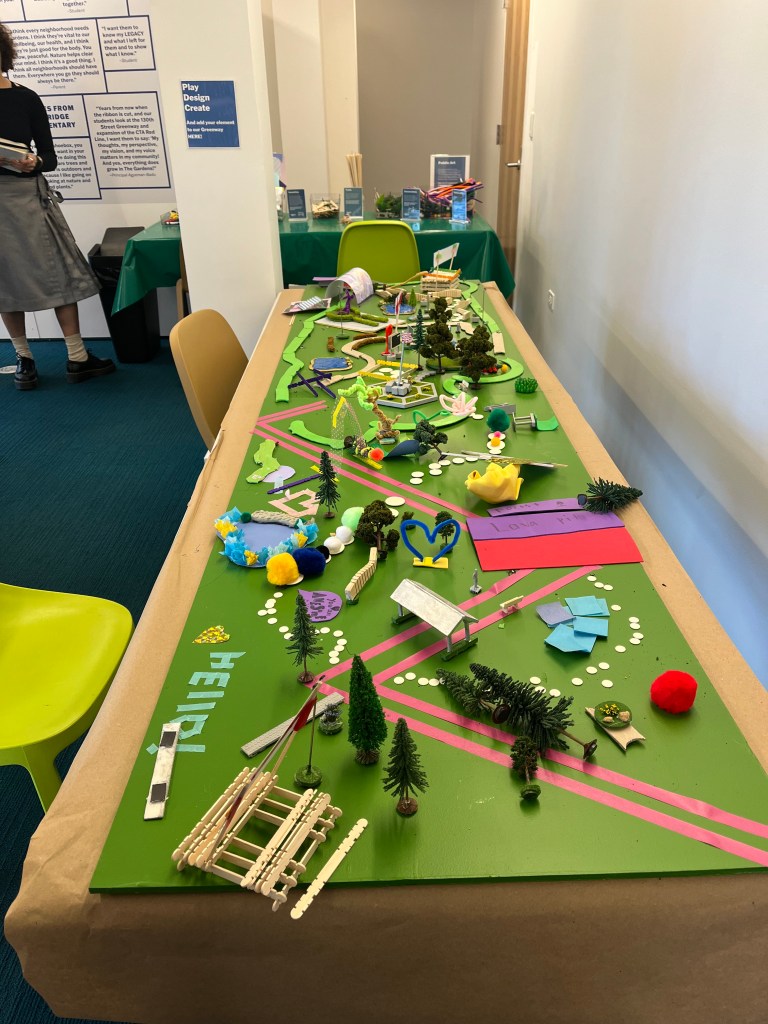
    Collaborative city diorama at the National Museum of Public Housing.

    We ended the day at the Hull House Museum with a half hour of wandering around and then a discussion with the curator, Ross Jordan. Ross gave us some back story on the social movement that Hull house came out of and how the museum honors that blueprint to this day. They continuously work to highlight the stories of low income and immigrants communities whether the subject is hot or cold. They aren’t doing anything different in this political climate, they believe their work should be an evergreen focus. This sentiment echoed of Dorian’s (the Director of Learning at the National Museum of Public housing that we also spoke with for an hour or so) words too. It is this feeling of persistence in the face of strenuous circumstances that I also want to remember.
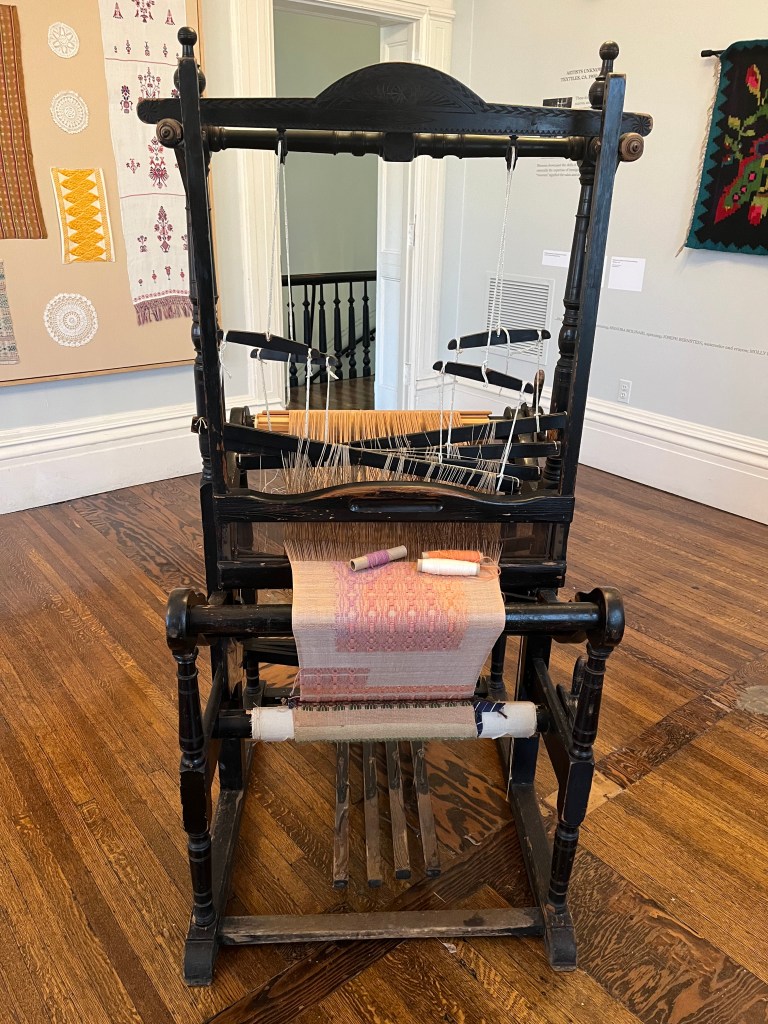
    A loom in the textiles exhibit at Hull House.
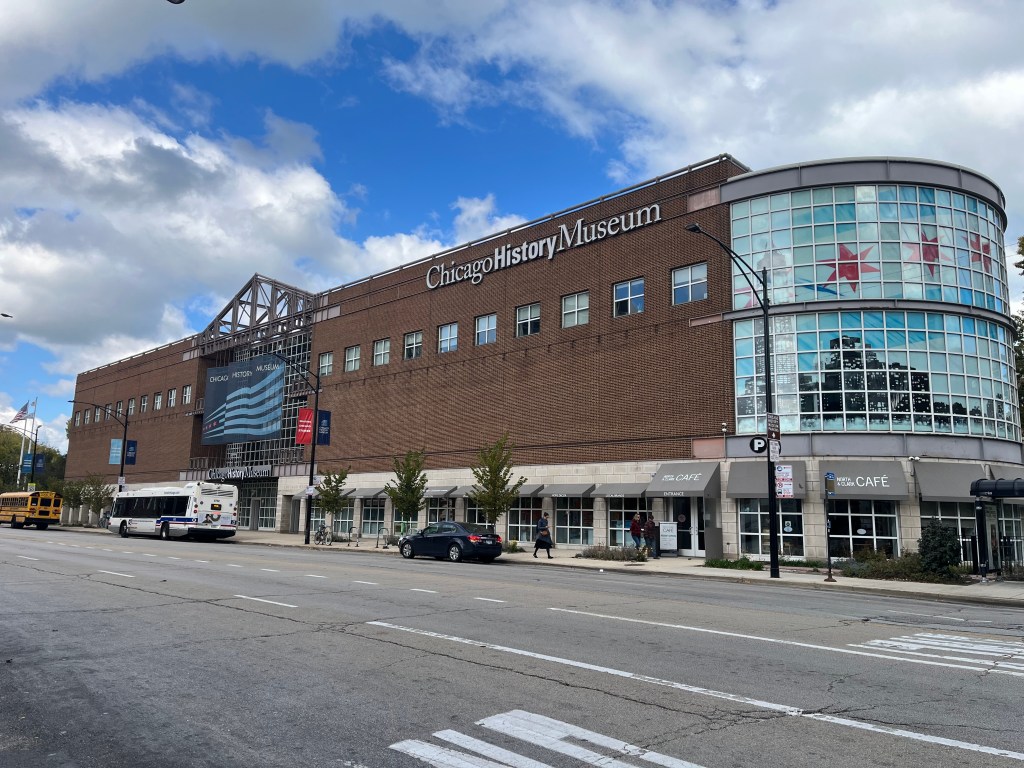
  • This morning we met at the Chicago History Museum and got to spend an hour exploring the exhibitions before we spoke with Elena Gonzales, the Curator of Civic Engagement (a position built just for her!). Because one hour was definitely not enough time to really take in everything I tried to see a little bit of everything to get a feel for the museum’s point of view. As a result I got to see their newest and oldest exhibits which I found really helpful. This gave me a good idea of where the museum was coming from and where it was trying to go.

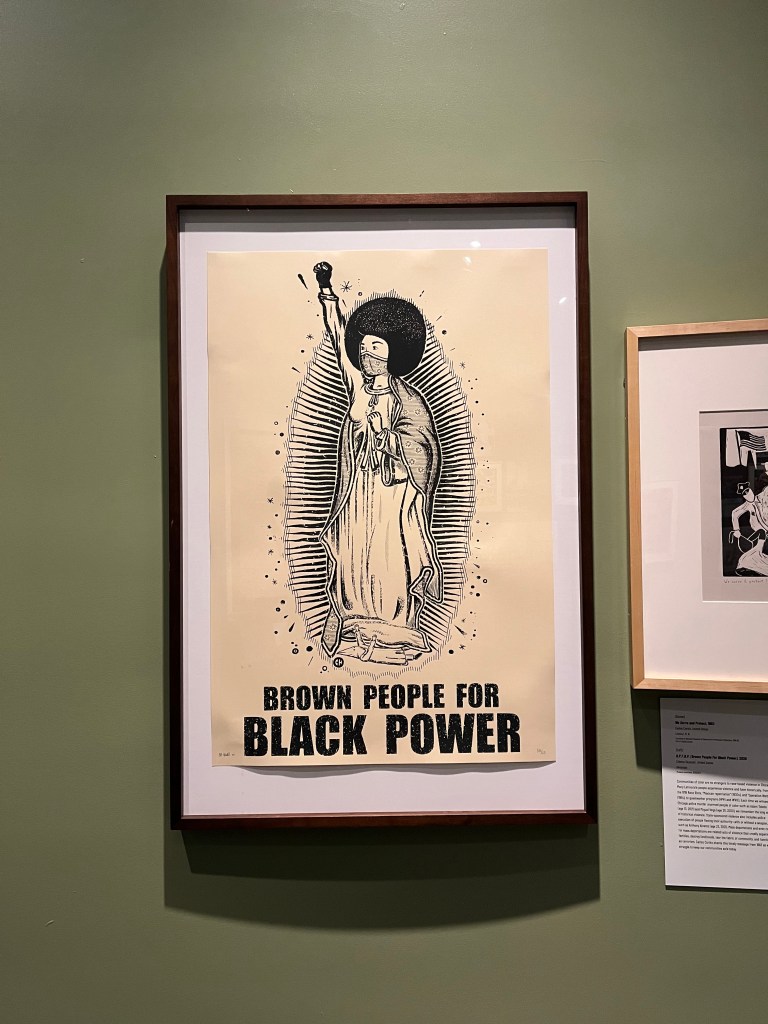
    Elena’s tour of the newest exhibition, Aquí en Chicago, highlighted her attention to detail and her curation style. This style, as she elaborated on later during her presentation, focuses more on the people and their stories with the objects as a vehicle. She sees her role in the ‘care’ realm of curation and that care is for the people first and objects second. This is how I view my own work! I didn’t start out to become historic trade preservationist. I am an interpreter first and practitioner of an historic trade second. I couldn’t do what I do without the people who came before me who did it or the people who come visit to see me do it now.

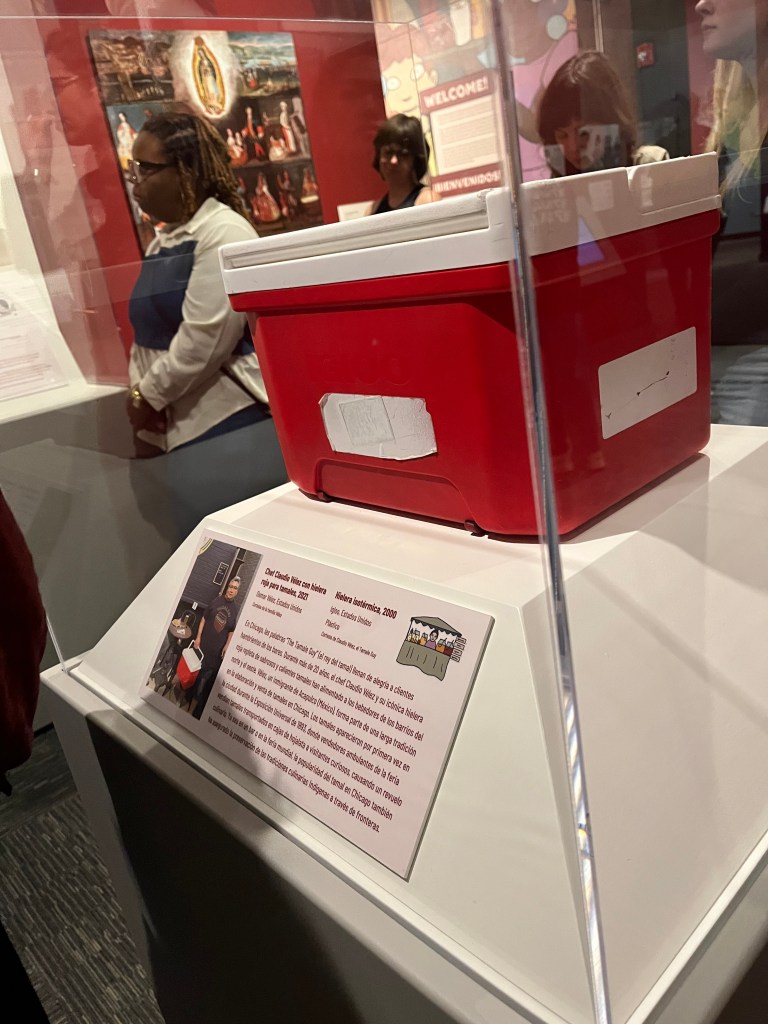
    The cooler of Chef Claudio Vélez, famed Chicago tamalero (tamale salesman).

    One of my biggest takeaways from Elena and the CHM was her comments on working at an institution in turmoil existing in a country in turmoil. I asked her how she maintains hope that her museum will become what she envisions and she voiced what I have been feeling for a while now: it’s day to day. One day you’ll be met with some kind of institutional road block, and the next you’ll have a rewarding interaction with a colleague or guest that will keep the spark alive. If she can hold on and create something as beautiful as Aquí en Chicago, then so can I.

    I’m going to let this one speak for itself.

    Our second museum of the day was The Institute of Art. We met with Robin and Sam in the Ryan Learning Center. This space is another one of those totally unique museums spaces. Situated outside the admissions process, this space offers opportunities for multigenerational art experiences and learning without needing to purchase a ticket. It’s open to everyone when the museum is open. This unique space combined with their Civic Wellness workshops that focus on building observational, communication, collaboration and skills as well as empathetic thinking strategies were incredible expressions of their commitment to being a resource for their community not a hegemonic authority on all things art. I was fascinated by their Teen Council as well! This paid internship for 15 Chicago teens facilitates community building, connection to art, and provides the museum with a focus group of young people. I really wish we had something like this at my museum. Even a community advisory board would be a step in the right direction to help up build community within our city. This is definitely something we struggle with.

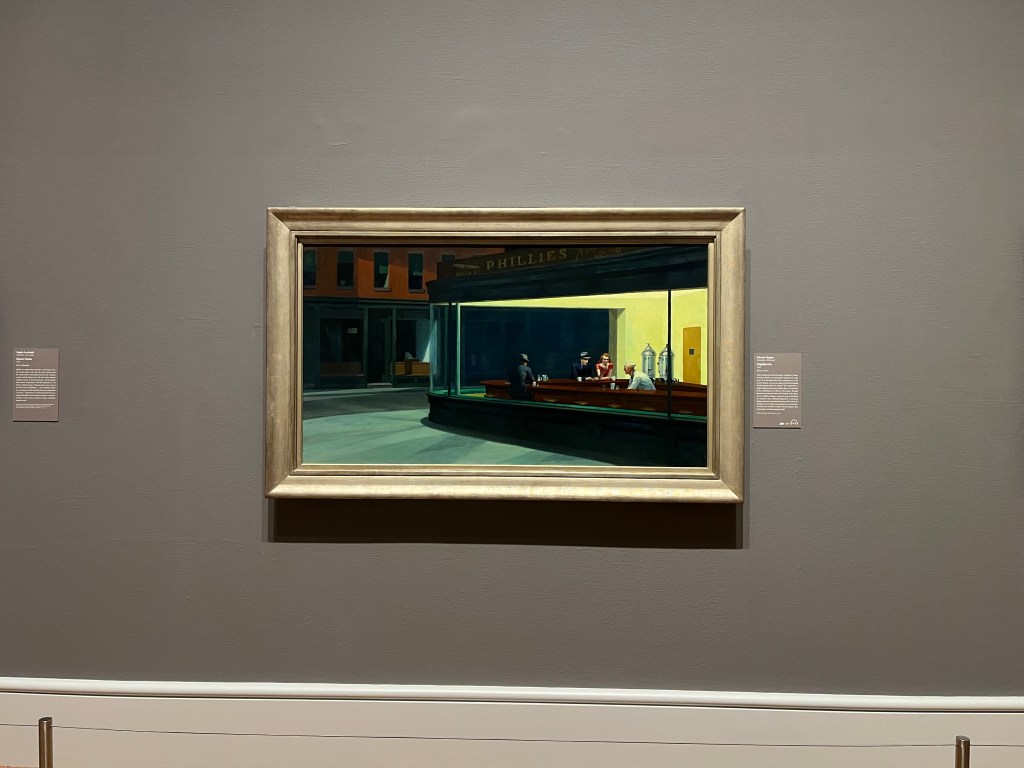
    Hopper’s Nighthawks.

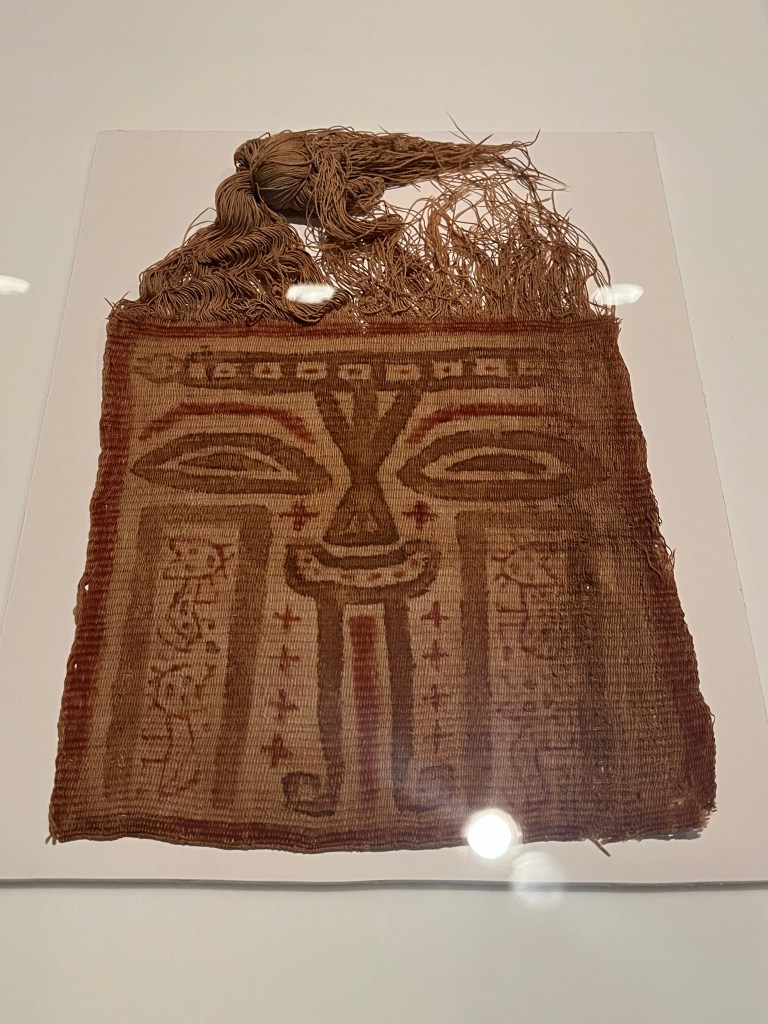
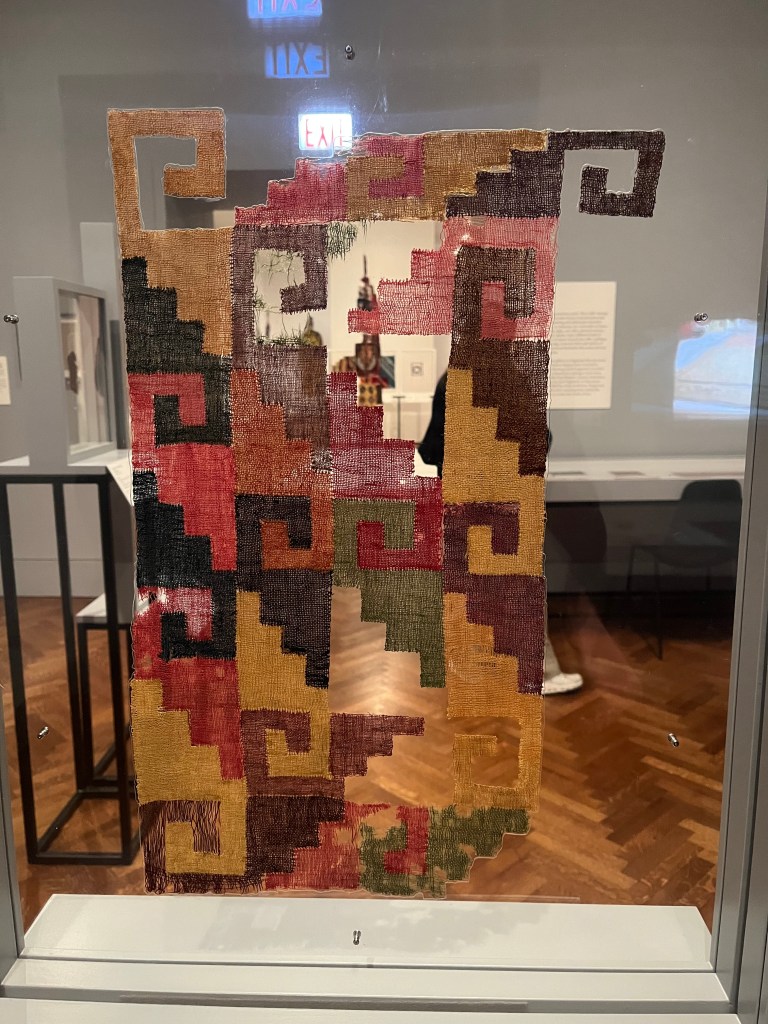
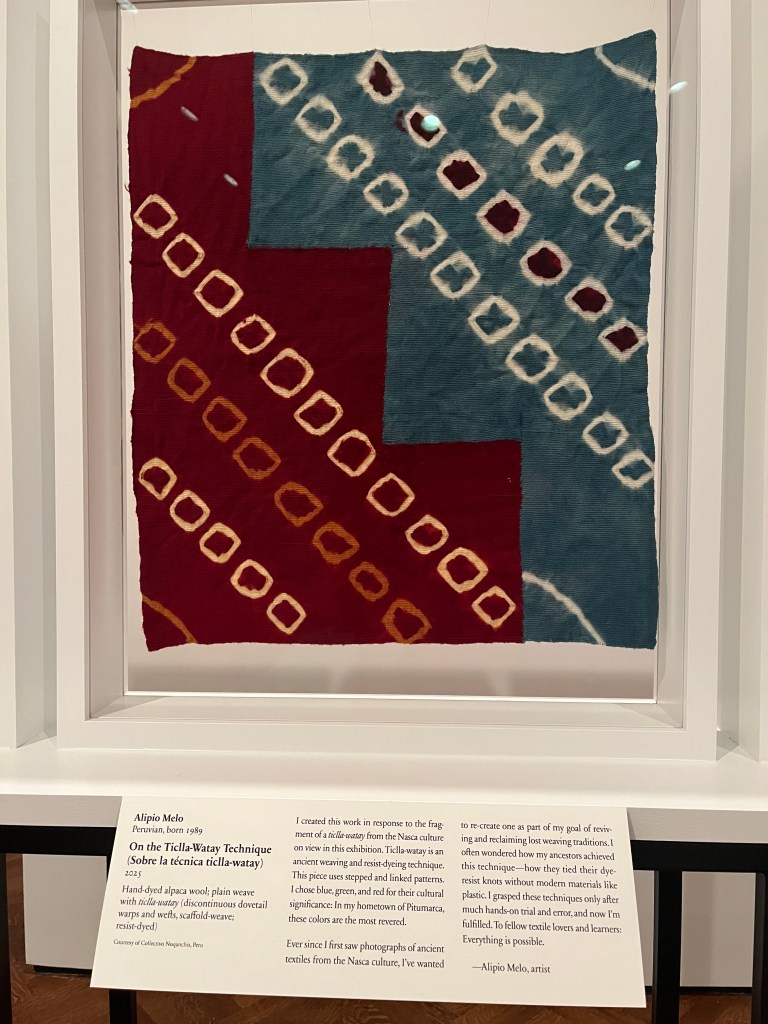
    I could go on and on about what I saw today and my thoughts about it, but I think I’ll leave you with some images from the textile exhibition I saw at the Institute of Art focusing on how textiles can be used to deal with grief, loss, and memory.

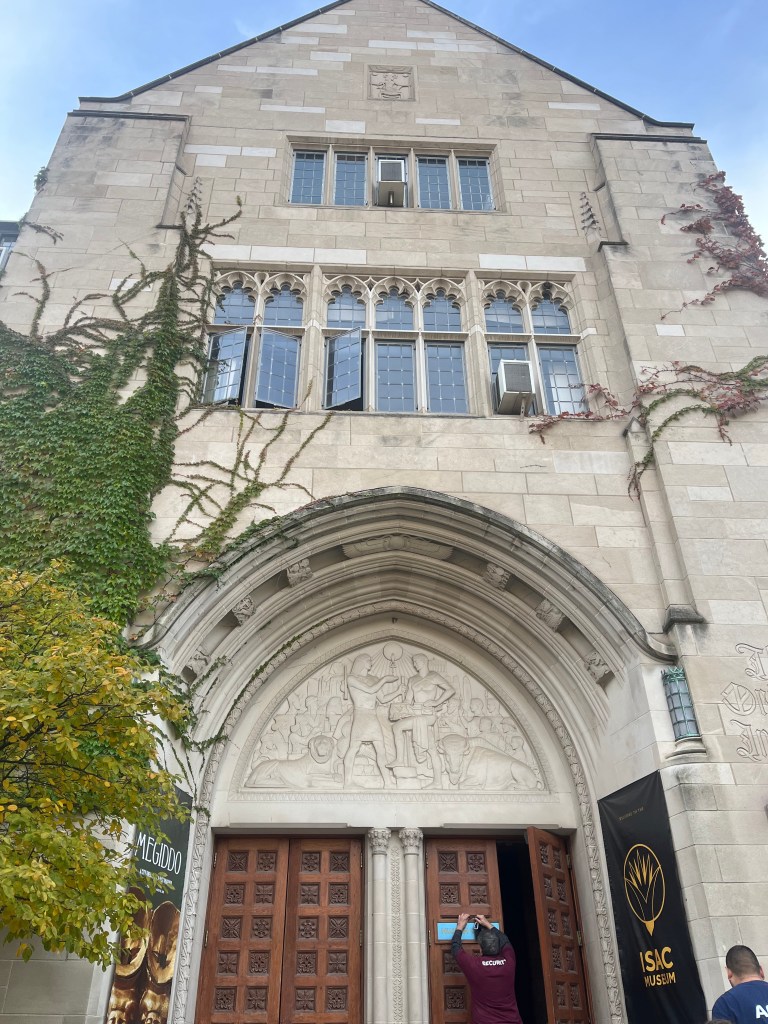
  • This morning we met with Tasha from the Institute for the Study of Ancient Cultures for a truly unique tour. The tour’s focus was decolonization, and Tasha spent much of her time calling out the ISAC’s past and present connections to colonialism. She was brutally honest about the ISAC’s past in a way that was almost jarring. She quoted colleagues who told her not to publicize Nazi connections, she pointed out poor signage and word choices, and discussed issues with collecting and displaying objects acquired under shady circumstances. I have to say I really appreciated her candor and even asked her about the institutional support she had to talk so frankly. She said no one has stopped her, but also that no one has really supported her and if she didn’t do this tour no one else would. She also said that the director when on one of her tours and said “oh, that wasn’t that bad!”

    The front entrance of ISAC is riddled with symbolism and context, illustrating that a museum is telling you things even when no one is speaking.

    I really related to Tasha. My own institution hasn’t told me to back down about the topics I interpret but I don’t always feel the rest of the museum’s interpretation style is as, shall I say, transparent as I am. Tasha’s comments about “if I don’t do this who will?” along with her commitment to truth and justice are things I would like to keep with me as I move through my museum career. To be honest, they were things I was already thinking about, but seeing another museum professional operate like this is heartening. If she can persist, then so can I.

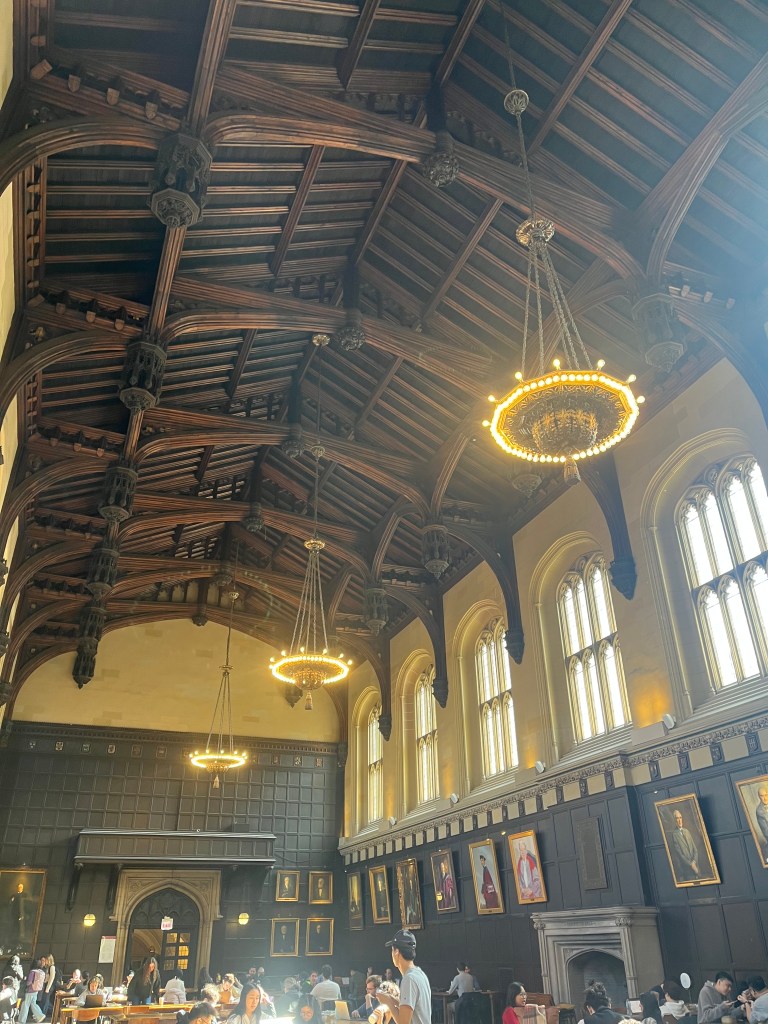
    The stunning and gorgeous Hutchinson Commons at the University of Chicago.

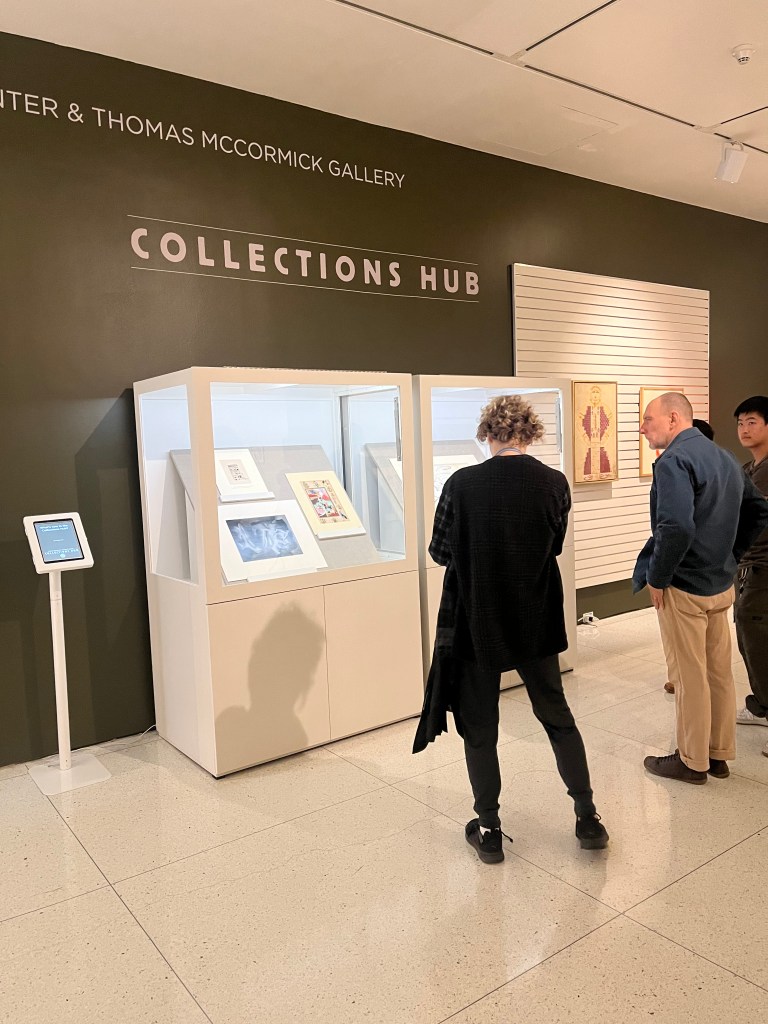
    After a quick lunch in the most gorgeous campus dining hall I have ever been to (pictured above), we met Galina and Chris as the Smart Museum of Art. Both the Smart and ISAC are operated by the University of Chicago and are embedded within their campus, so the perspective of an academic museum was a much needed one among all the other private organizations. Their commitment to being a resource to the university is a core way they create community. Their exhibitions, collections, and study rooms are all in service to the faculty and students of the University of Chicago. I’ve really never seen anything like it! Their services are in such high demand that they created a Collections Hub to be able to display things that classes might want to work with. This Hub is set up to house just a handful of items for classes to come and see, but a staff member doesn’t need to be present to monitor the items like in the study spaces. This is a really creative and unique way of solving several problems at once without decreasing their offerings. This creativity and commitment to their University community is another thing I want to take with me. When the community asks for something, find a way to provide it.

    The Collections Hub with a class actively using the space.
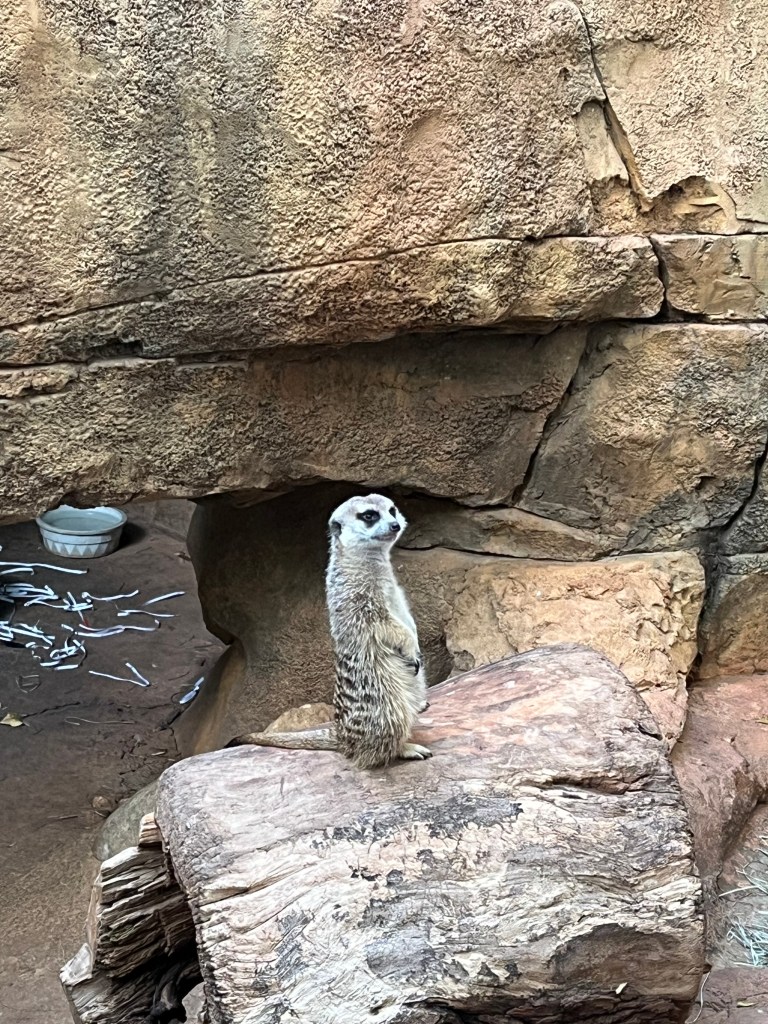
  • A meerkat on the look out at the Lincoln Park Zoo.

    Allison Price, the Senior Director of Learning and Guest Engagement, took the time to meet with us today in arguably the coolest conference room I have ever been in. Sandwiched between two lion enclosures (on full display to the lions I might add), we spent some time learning about the values and scope of work for the Lincoln Park Zoo. This zoo is one of the three oldest zoos in the nation and the only privately run zoo offering free admission. Their continued commitment to remaining free has actually lead to increase donations! Price emphasized that because the community values the zoo and wants to support them in their decision to remain free and open to the public, the community contributes 34% of their revenue. 38% percent of their revenue is earned (through their cafe’s, gift shops, and paid parking). I found this financial breakdown fascinating. Because they don’t charge admission and therefore do not rely on ticket sales, they were largely unaffected by then COVID-19 pandemic. This was echoed by many of the other free museums we visited last week, proving that ticket sales aren’t the end all be all many other institutions think they might be.

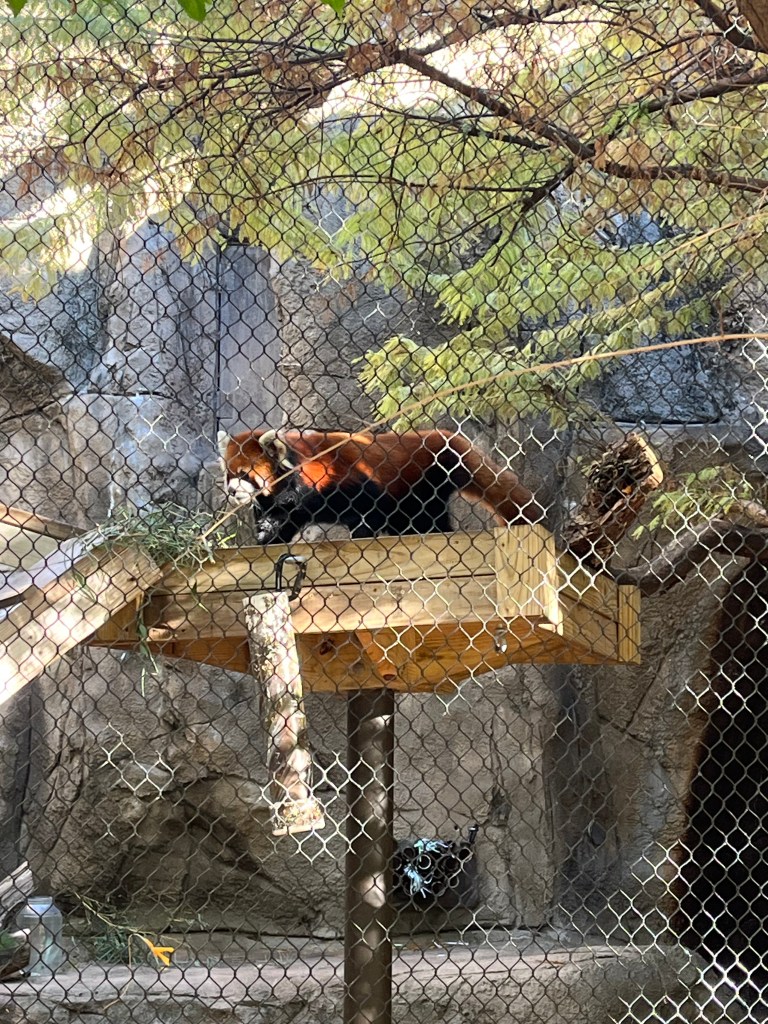
    A red panda on their morning enclosure patrol. One of my all time favorite creatures. I mean come on, look at that face!

    The attention to detail given to animals of all shapes and sizes is truly heartwarming. From bugs to big cats, the LPZ designs spaces with animals in mind first and people second. That’s not to say that people are a complete afterthought. By no means. In fact, accessible spaces and programming are a built into the every day. From eliminating stairs and moving restrooms for wheel chair users to offering ASL interpreters at all programming from May to November, accessibility is at the forefront of the LPZ’s mind.

    I would really like to take this idea of accessibility for human and non human creatures into my work. I deal closely with both people and animals in my current role and being able to offer accommodations (from the jump and not as an afterthought) for all the earth’s animals that I interact with absolutely needs to be the core of my work.

    The Lincoln Park Zoo is probably one of my new favorite zoos. And I say all this having sat on a wet bench and getting stung by a bee (my fault not the bee’s or the zoo’s)!

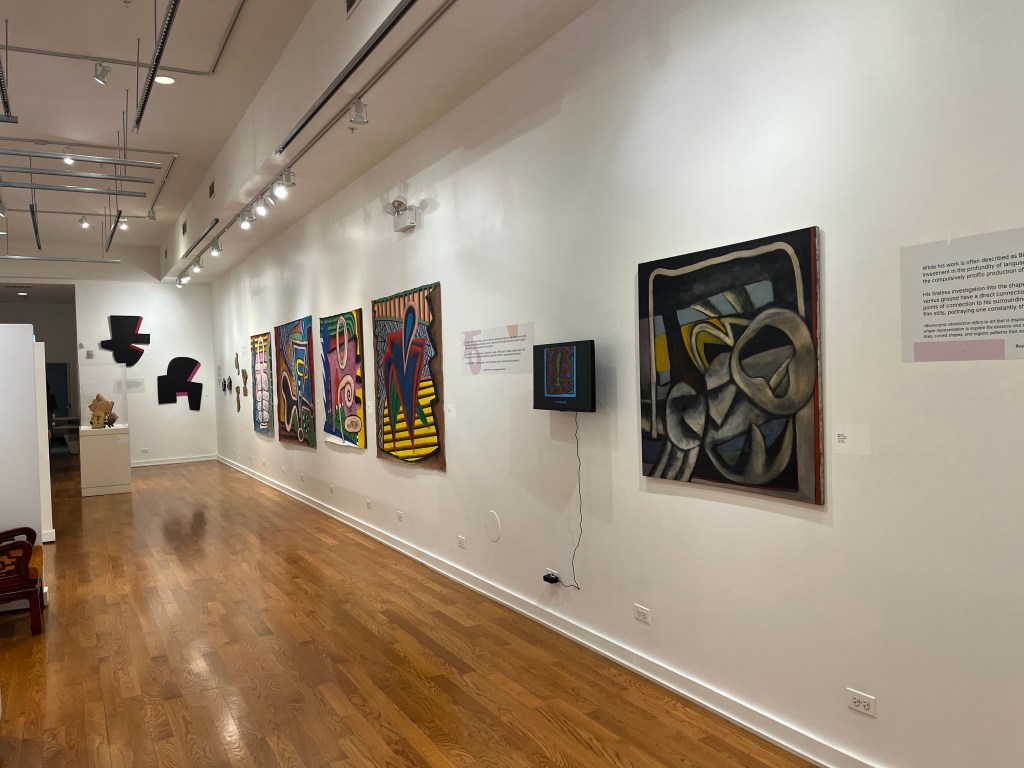
  • This morning we met at the Chinese American Museum of Art for a free flow exploration of their galleries. There are three floors of art and history exhibits that connect the guest to the stories of Chinese Americans who immigrated to the US for a variety of reasons. While I wish that we had been able to meet with a representative of the museum, spending some time just exploring with a group of like minded people was just as lovely.

    The right side of the gallery on the first level of the Chinese American Museum of Art.

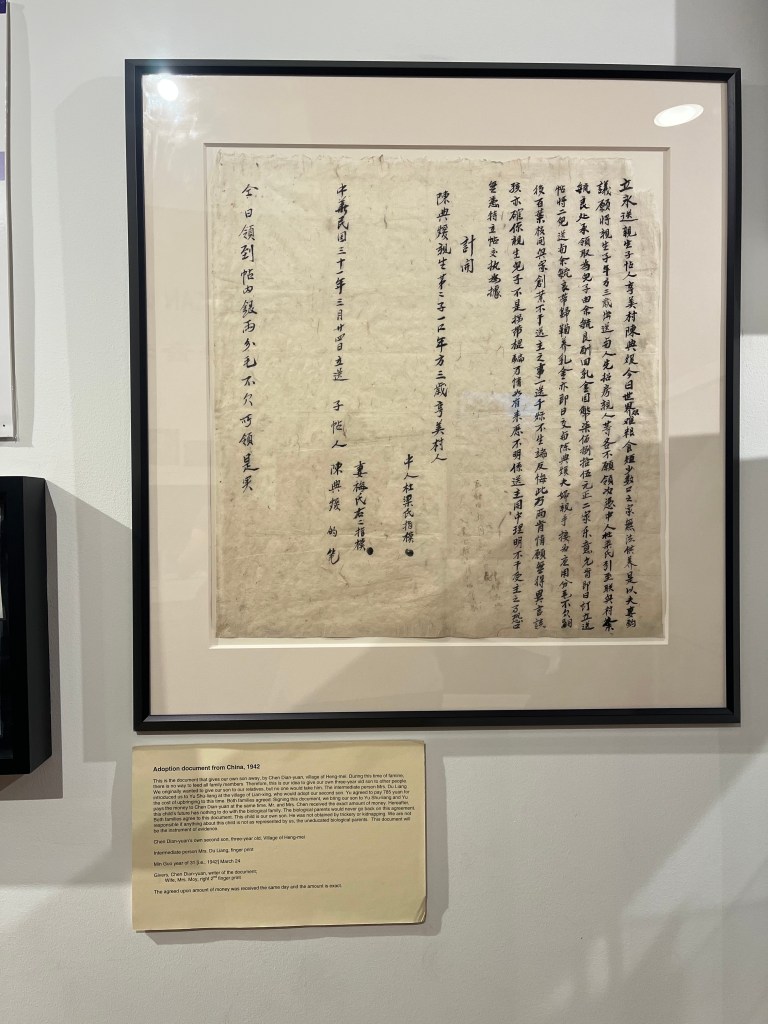
    One of the things that surprised me on the second floor history exhibit was the section on Chinese adoption by US families. It is certainly something I’m aware of, but seeing the numbers in front of you is a whole other story. 60,000 children have been adopted from China to the US since 1990! Considering this to be one of the largest forms immigration should not have been surprising to me but definitely was.

    An adoption document stating the biological parents will no longer have any claim to the child they are giving up.

    I really enjoyed the 45 minute movie shown the history gallery. This documentary spent time with two Chinese Americans living in Memphis, TN and compared and contrasted the experiences of several generations of Chinese Americans. While it wasn’t a Chicago specific story, I think the museum’s decision to include this film in their exhibit shows that they feel the stories of people in both Chicago and in Memphis are parallel to each other. The idea of intergenerational learning was really showcased here and it’s definitely something I want to explore more in my own museum practice. I see many families in the course of my work and I want to be encoring the generations to share their stories in the moments I have with them. Taking your elders for granted is a surefire way to lose your history.

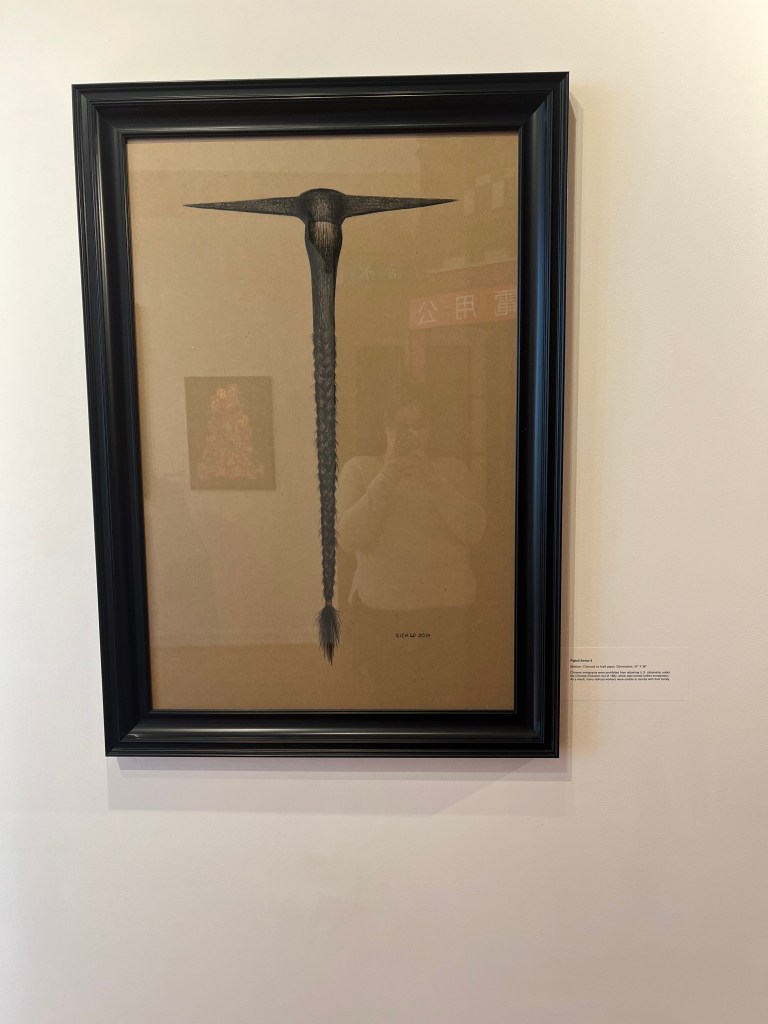
    One of Rich Lo’s pieces from his Pigtail series which explored the trials and tribulations endured by Chinese American Immigrants to the US. This one deals with the many thousands of railroad workers.

  • This morning we were greeted at the National Museum of Puerto Rican Art by Veronica Ocasio, the Director of Programming and Education along with her team. Like the National Museum of Mexican Art they have not charged admission from the start. There is a fascinating dichotomy here between the larger museums (The Shedd and Field) being paid while the smaller museums remain free even in the face of extremely difficult financial circumstances. Ignaik, the lead docent and manager of guest services, gave us a tremendous tour of the galleries. He was so personable and thoughtful that he made the artist’s stories come to life. You could see the care and passion he had, not just for the NMPRA but for the history and culture of the Puerto Rico and its diaspora.

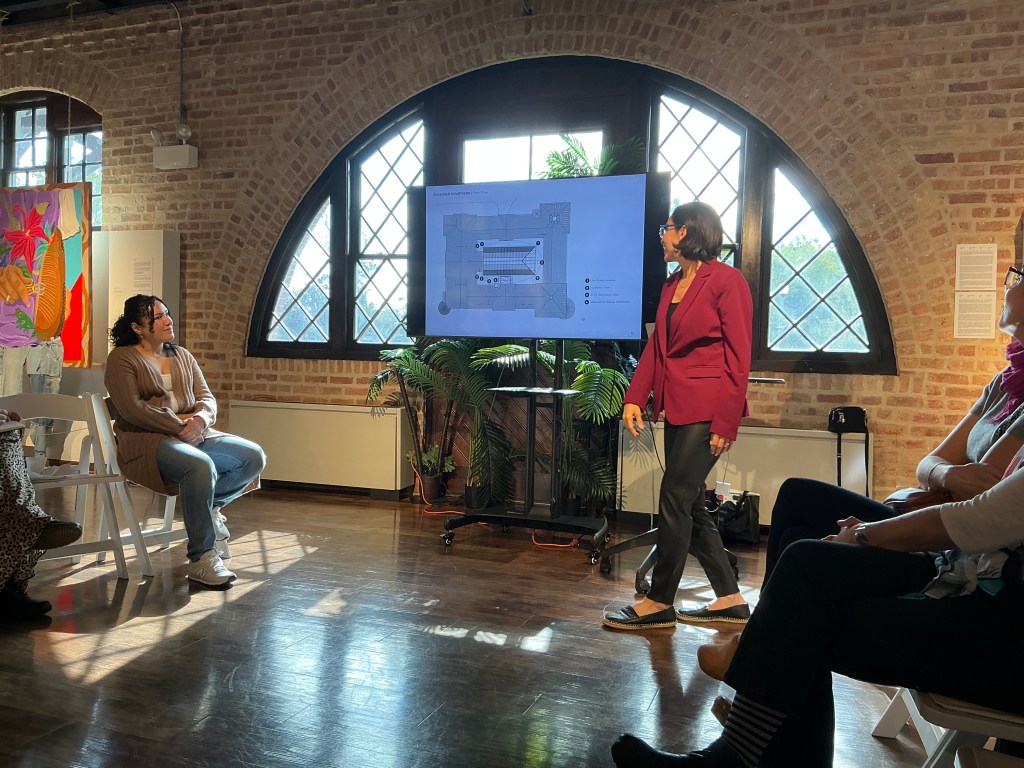
    Veronica Ocasio telling us about the upgrades to their courtyard that are slated to take place in the next few years.

    Then we were whisked away to the Ukrainian Institute of Modern Art where Elena graciously welcomed us into their kitchen for lunch. She spoke us of the founding of the UIMA by two Ukrainian artists who sought to create a community for like minded people and the struggle to get a permanent physical space. The second half of the afternoon was spent at the Ukrainian National Museum where Kseniia and Halyna welcomed us. Kseniia, despite her insistence that she was not the ‘wise’ one, lead our tour with charm, knowledge, and grace for hard topics.

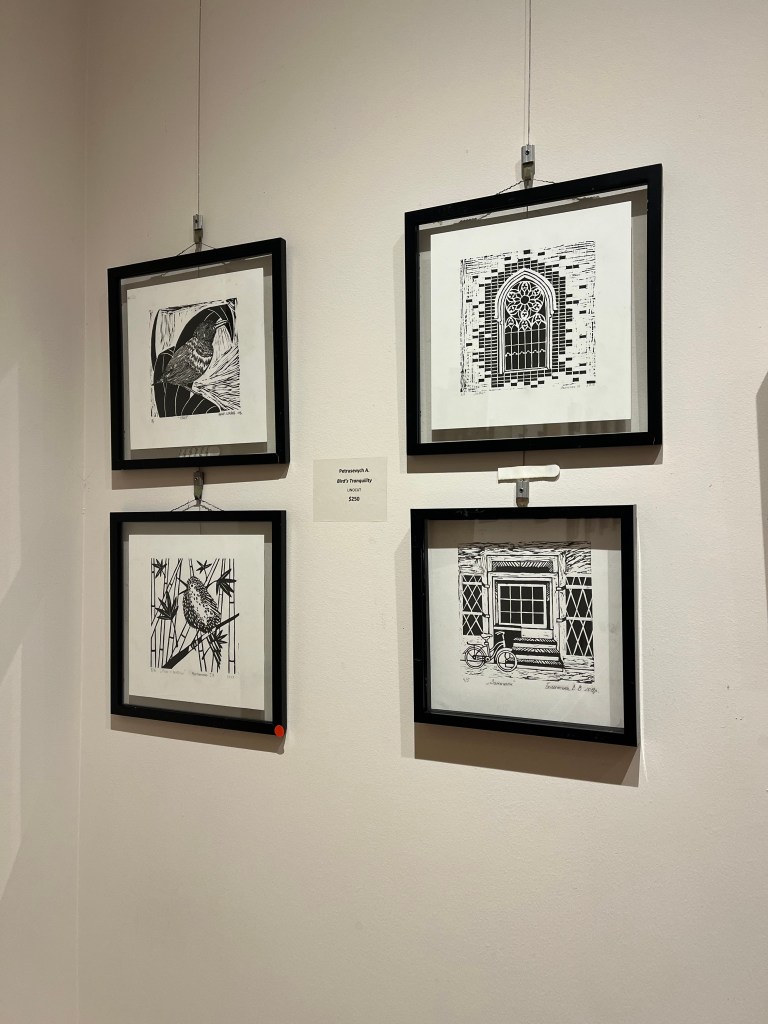
    Linocuts on display at the National Ukrainian Museum.

    With these smaller museums it really does feel like the staff are welcoming you into their homes. The joy and pride they exude while they show you around warms you nearly as well as hot coffee and pastries. Above all else today, this had been the thing that I want to bring with me into my museum practice. I want everyone who visits my site to feel at home and therefore comfortable enough to ask whatever burning questions they have. And if those questions have hard answers I would hope that the comfort I built allows those hard conversations to go smoothly with mutual respect.

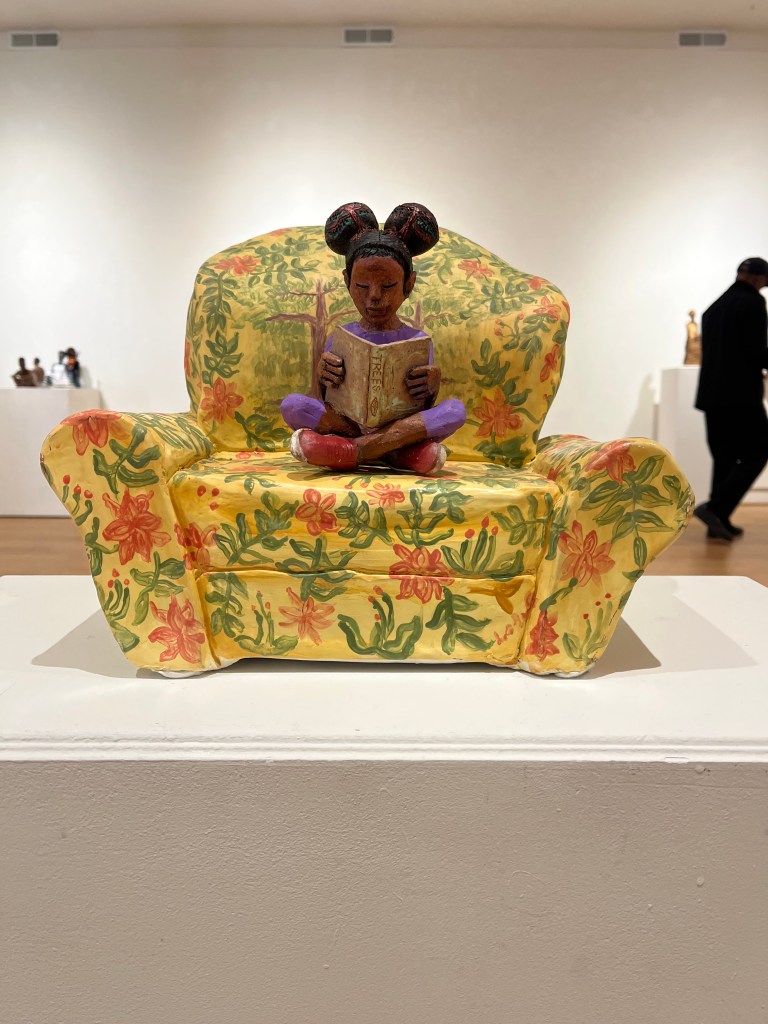
    A clay piece by a Black artist on display at the Ukrainian Institute of Modern Art for the “Black Women and Clay” show. Demonstrating the platform for all artists the UIMA provides in Chicago.

  • Bright and early this morning we met with Raquel and Cesáreo at the National Museum of Mexican Art (NMMA) for a vibrant discussion centered around the Chicago Mexican community through the lens of fine art. The NMMA was started by a group of ‘Xicago’ public school teachers who saw a need in their community for arts and culture education for their young people. The twin pillars of education and community have been truly embedded in everything the NMMA has done since its infancy. One of the ways they accomplish this goal is by being both free and completely bilingual since their opening. Cesáreo emphasized several times that if the institution even charged a dollar for admission then families in the community could not come, and often its children who come either with schools or in groups end up bringing their parents back instead of the more traditional model of parents bringing their kids places.

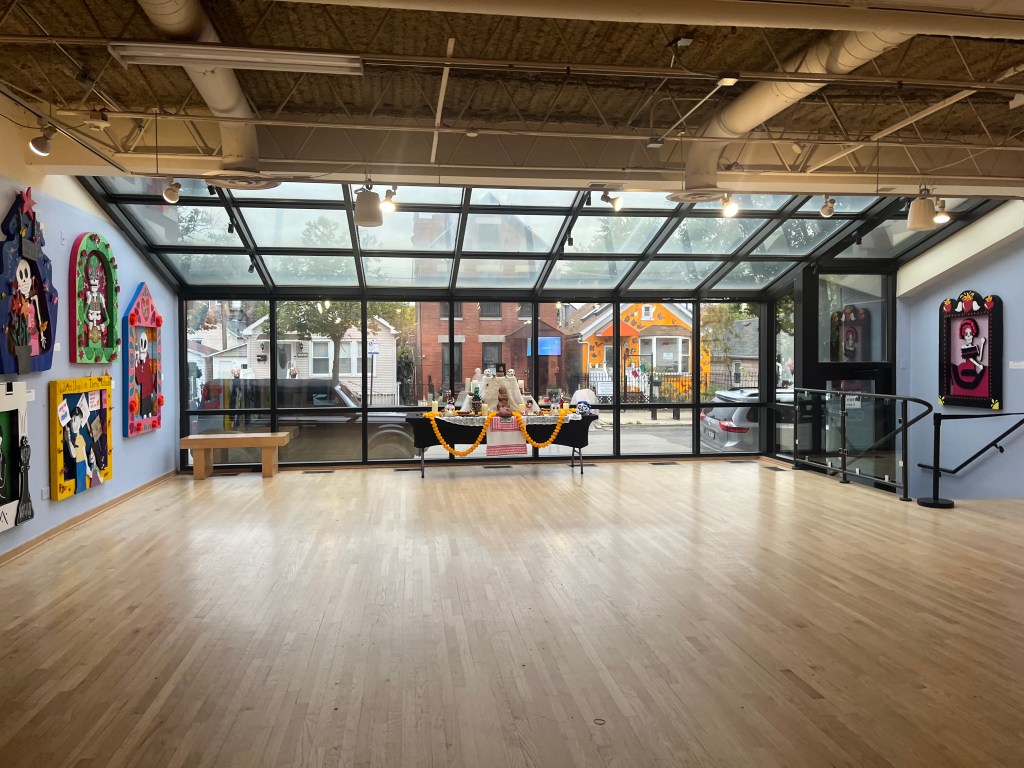
    Nicknamed “the courtyard” by museum staff, this space acts as a multipurpose community space and youth art gallery.

    One of the most beloved endeavors of the NMMA is the Yollocallí Arts Reach community center. (Their website is delightful by the way, please do check it out.) This community center and free youth arts program helps to build strong cultural and community ties while providing young people with skills and support to achieve goals they may not know exist. I think this is something my own institution should study. We don’t offer nearly enough children’s/youth programming as it is, and if we had something like this community center where the museum professionals from any and all departments contributed we might build a better connection with the future of our own city. It could allow us to develop future connections for the museum as kids grow into adults with their own lives like Raquel did. There are so many types of jobs at my museum that kids could try their hand at everything from archaeology to music to blacksmithing.

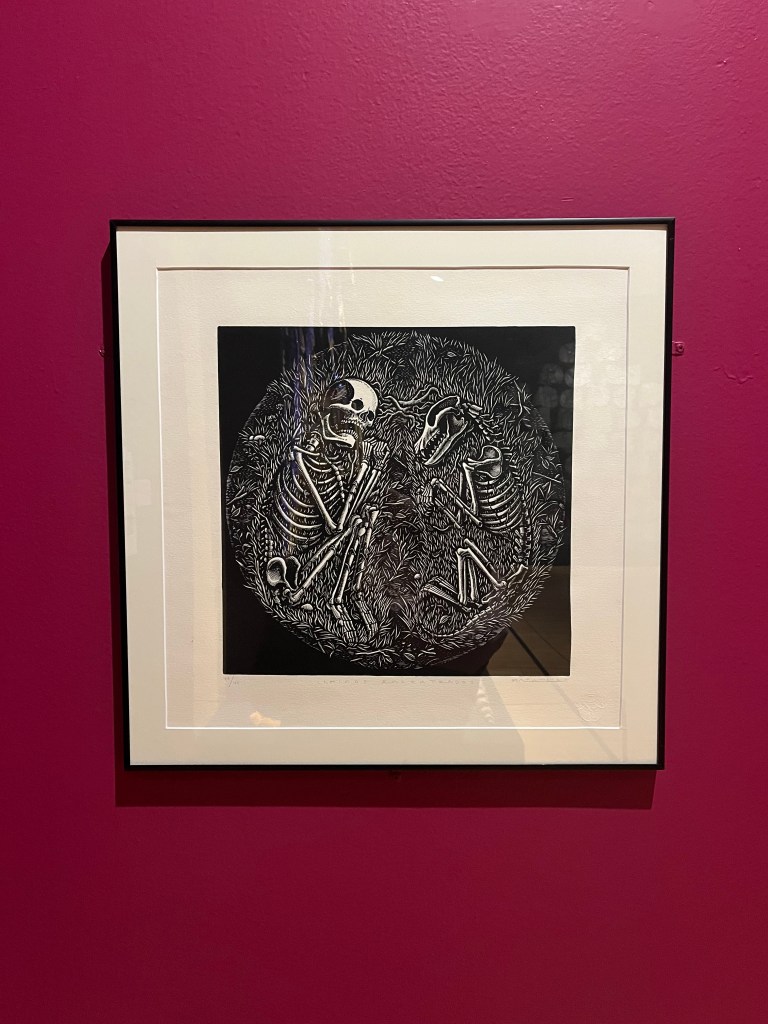
    A stunning linocut in the Dia de Los Muertos exhibit which is an annually recurring exhibition.

    After some truly fantastic tacos at 5 Rabanitos we met with Susan and Emmeline at the Field Museum where we were lead through the newly renovated Native Truths exhibit. Susan and Emmeline told us how the exhibition was made possible through the contribution of over 130 tribal nations! The hard work and passion of those Nations was on full display in the Native Truths exhibit. After a tour of a few more exhibit spaces we packed into a conference room and talked about the process of designing and planning for new exhibits within the museum. They generously pealed back the curtain for us and were honest about the difficulties and intricacies of the job.

    Definitely in my top three days so far!

  • This morning we met with Nora and Analú at the Newberry Library for an incredible discussion on some of the things from their vast collection. The documents that they pulled to tell us Chicago’s story were a wide ranging as they could be. From protest art to Malcom X’s Pullman employment record card to family photo albums, we saw an incredible snapshot of Chicago’s paper history. The documents were all connected in someway to incredibly diverse residents of Chicago, such as the ancestral inhabitations of the land, the Potawatomi People, the Latinx community, and the African American community.

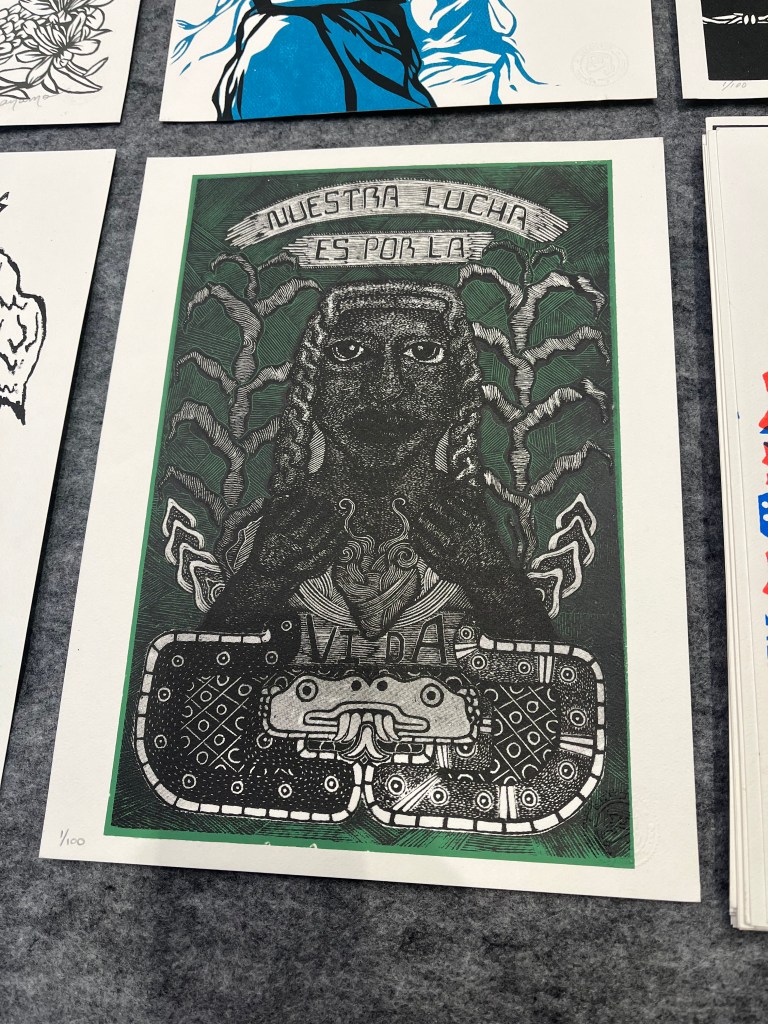
    Published by Gráfica sin Fronteras, this print says “our fight is for life.” This will likely connect well to our visit at the National Museum of Mexican Art for the morning of day three.

    One of the things that resonated with me was the emphasis that Nora placed on what the Newberry Library was for. She said that the goal of a place like a collecting library like the Newberry is twofold: 1) to preserve and conserve the ephemera, 2) to share that information to those who may wish to learn from it. He comments really emphasized to me that the stories of the objects are always stronger when places in context with their history and with other objects. More context often equals a more complete story. Continuing with this thought, I was reminded that most of what I personally do in my museum setting is provide the context. Interpreting at a living history museum is embedding that context and using the surrounding artifact infrastructure to convey context to visitors!

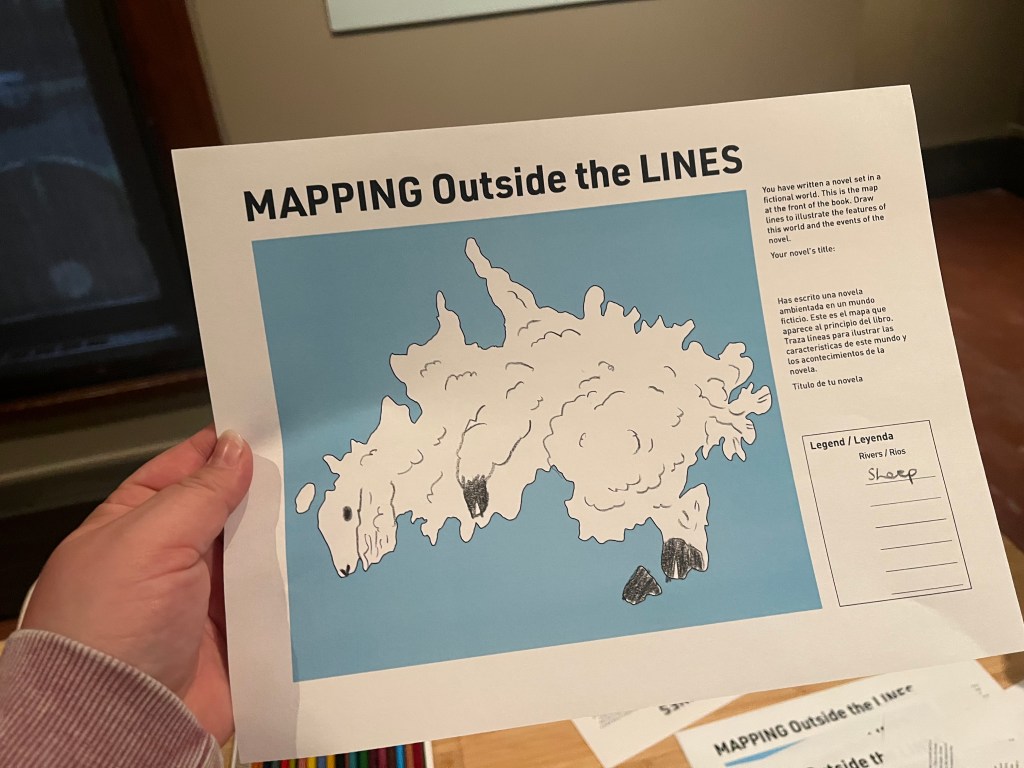
    The Newberry’s recently opened Map exhibit gave people an opportunity to create their own fictional map. I had to laugh at the legend of this one clueing the reader into the fact that this is, in fact, not a map but a sheep!

    After some fantastic shawarma for lunch, we met with Sarah at the Swedish American Museum in the Andersonville neighborhood. This medium sized museum with a cafe, shop and several floors of exhibitions (including an adorable children’s museum) tells the story of the large Swedish population in Chicago. It was like an extension of our conversation about immigration from the Newberry. Their main museum floor was a comprehensive loop following the push and pull from Sweden to Chicago, and what the lives of the immigrants were like before and after arrival. The sense of community here was really strong as the SAM was built by the community for their community.

  • Today we met with Kyle at the Shedd Aquarium and Patty and Voula at the Museum of Science and Industry. I was absolutely delighted to spend an hour wandering the Aquarium with my group (Meegan and Caroline). When I visit a museum I am constantly analyzing the decisions that when into the space and the tools the designers use to bring their story to life, so it was really nice to be able to share those thoughts with two others doing the same thing as not many people in my personal life think about museums like I do.

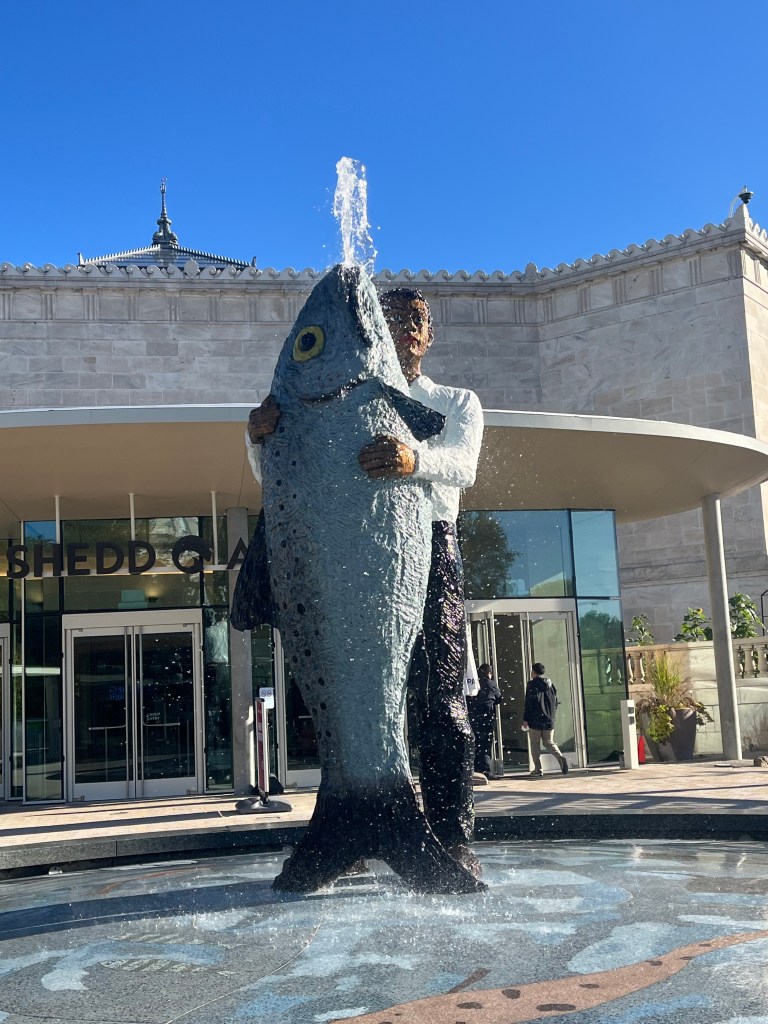
    Man with Fish (my new fav fountain)

    The centennial campaign underway at the Shedd was a really exciting thing to see as well. Comparing and contrasting the updated exhibits with the to-be updated exhibits/ spaces was like watching a cake bake. You know what it’s going to turn into but watching it rise in the oven is pretty exciting. It made me think about my own museum. We are turning 100 next year, but I feel as though our centennial is going to be over shadowed by the semiquincentennial of the US next year. There are no major infrastructure upgrades planned like the Shedd creating a new and accessible visitor entrance. My institution is perhaps one of the least physically accessible sites I have ever been to. This is to say that a museum’s past is nearly as important as the past it seeks to discuss. The past informs the choices of the present. It makes me want to dig into my own museum even more and encourage us to showcase our 100th birthday.

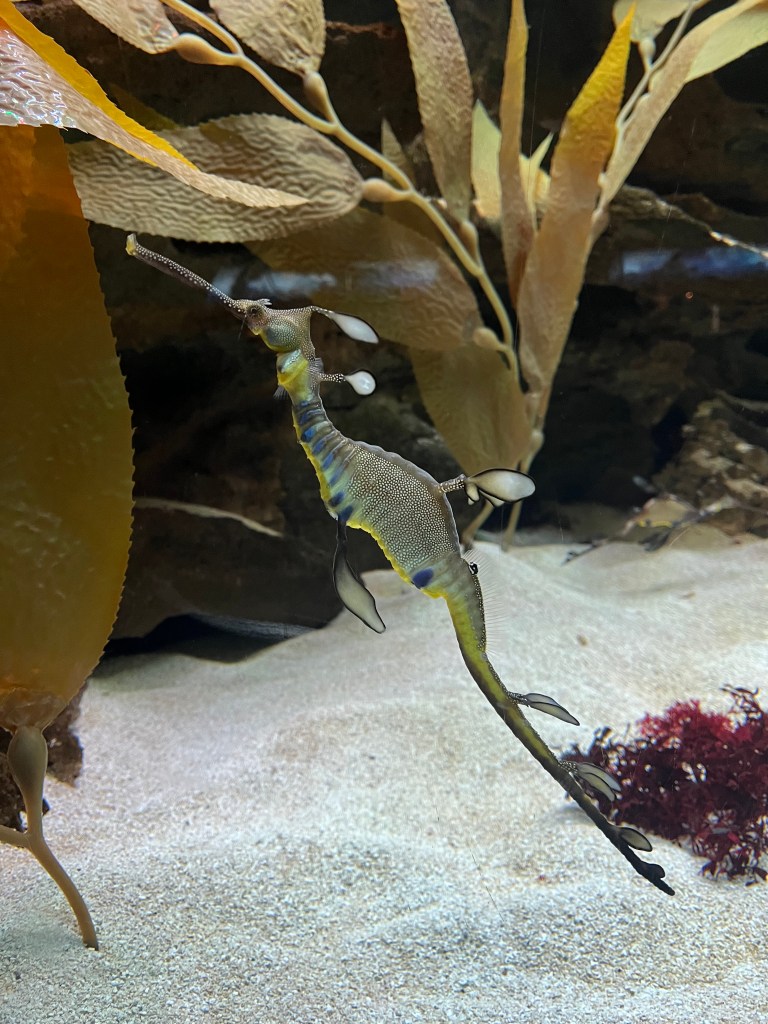
    Leafy Seadragon!

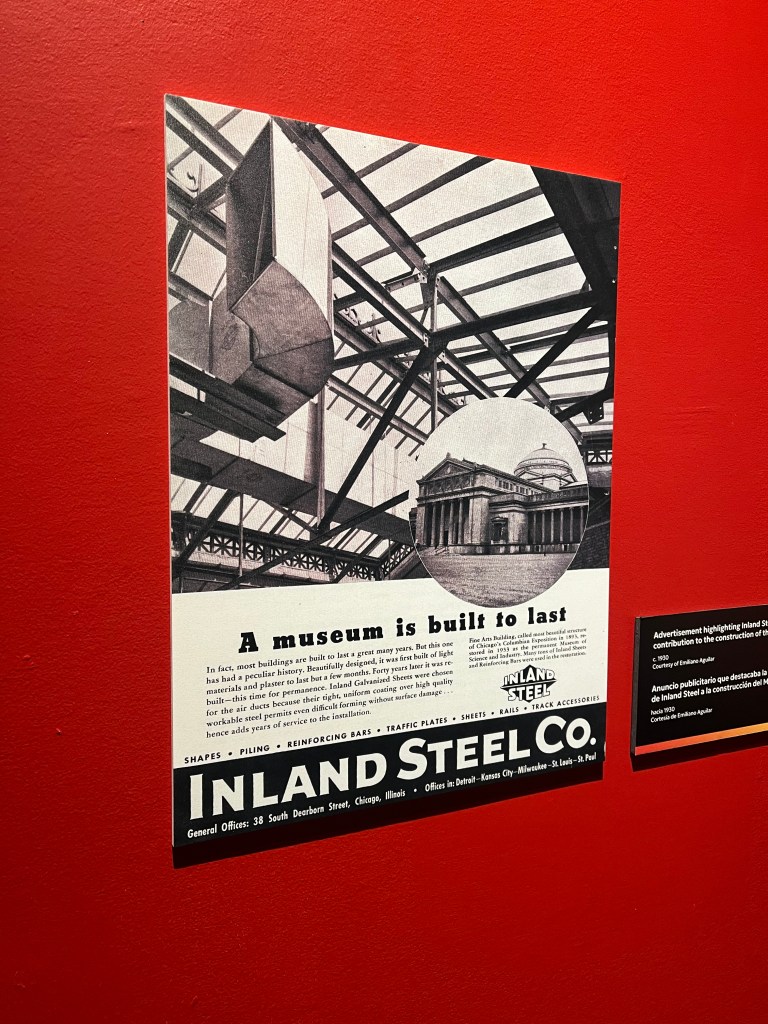
    The Shedd paired nicely with the Museum of Science and Industry. I could see the architectural similarities as they had both been built in the 1930s. Because of their blue prints they felt like good mirrors: a central rotunda with exhibits like coming off in spokes. The sheer size of the exhibits were fantastic. Definitely on the list to return to. The Steel Exhibit that Voula gave us a tour of was such a fantastic way to connect to the local history of steel and steel workers through the ages. I was especially interested in the fact that the grant that had funded the exhibit dictated that three community groups be involved in it.

    A 1930 steel advertisement featuring the very museum the ad is now exhibited in. The layers of community!

    Overall, today was an incredible start to the next two weeks. I am so grateful to be doing this program and can’t wait to see what our group project looks like.

  • Hello fellow museum fanatics! I put together a short introductory video. To get to know me a little better, follow this link to YouTube https://youtu.be/S4H_SHKquHE